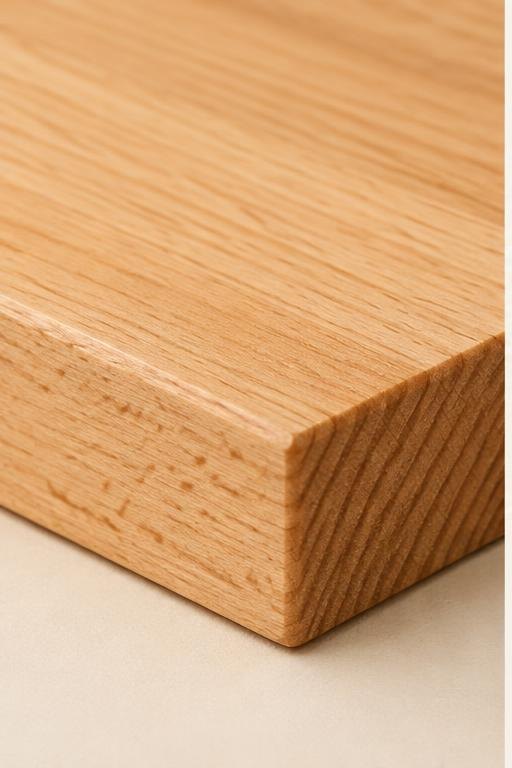
Solid wood
Glued lamellas of beech, ash or walnut. The longest lifespan, can be sanded and re-oiled, and every piece has its own grain pattern.
- Durability
- Highest
- Moisture resistance
- Good, with regular care
- Price range
- Premium
Materials and finishes
Material decides both the look and the price. Here is the difference between solid wood, MDF and particle board, explained simply.
Glued lamellas of beech, ash or walnut. The longest lifespan, can be sanded and re-oiled, and every piece has its own grain pattern.
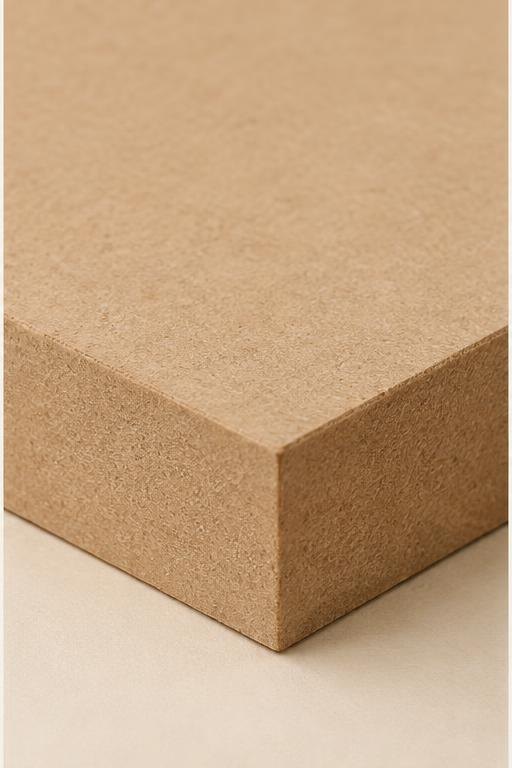
A homogeneous board of fine wood fibres. Ideal for routed and painted fronts because edges can be shaped with no visible joint.
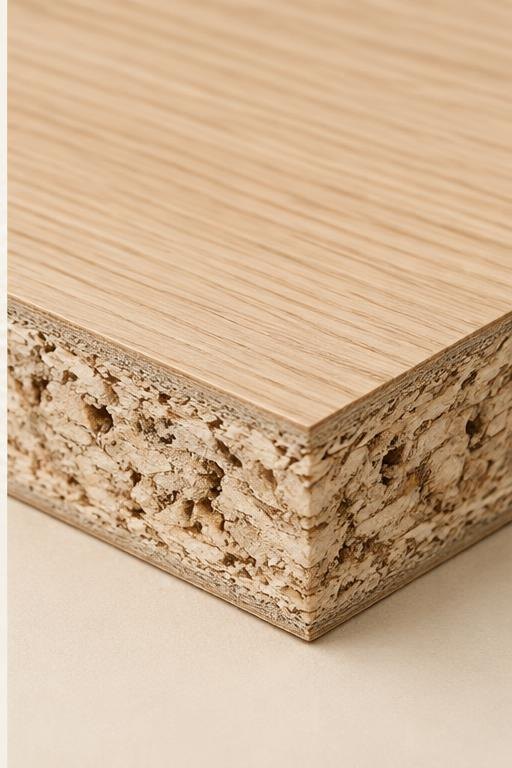
Pressed wood chips finished with a laminate face. The most economical choice for carcasses and shelves, with all edges banded as standard.
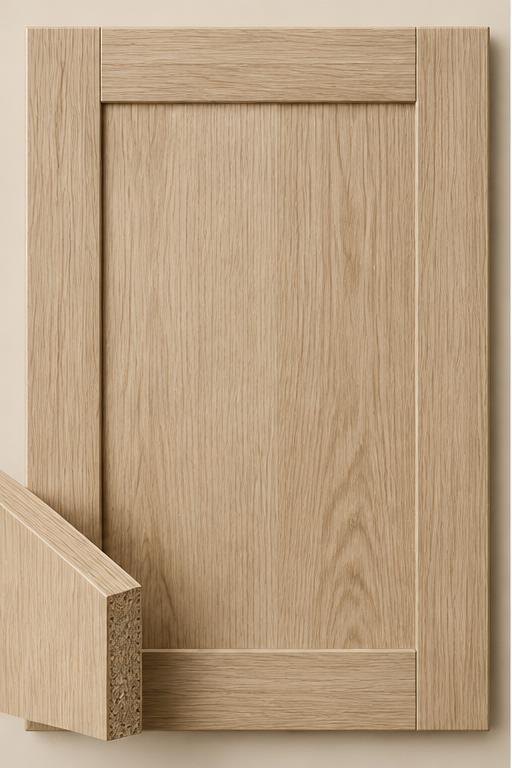
Faced particle board with ABS edging. Hard-wearing and the most affordable option for fronts.
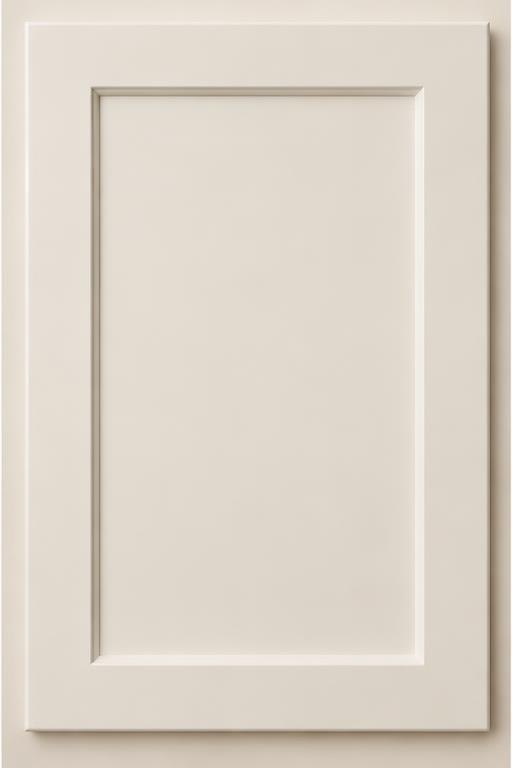
Foiled or faced MDF — clean edges and straight lines with no visible joints.
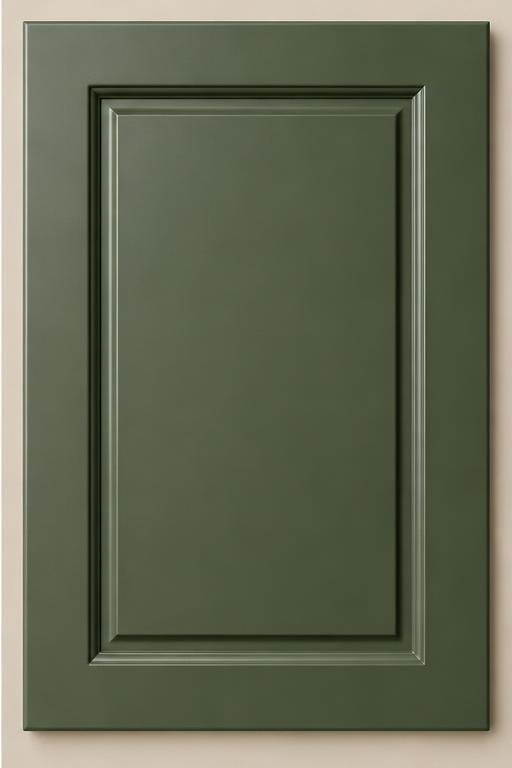
Booth-sprayed in any tone, matte or gloss. The richest look and the easiest to refresh over the years.
Worktop with a moisture-resistant core in wood and stone decors. The best balance of price and durability.
A thicker layer and truer decors, with edge detailing that reads as solid material.
Thin high-density compact board — resistant to water, heat and scratches, for kitchens used every single day.
| Material | Durability | Moisture resistance | Look | Price range |
|---|---|---|---|---|
| Solid wood | Highest | Good, with regular care | Natural grain, warm tone | Premium |
| MDF (medium-density fibreboard) | High | Good in the water-resistant grade | Smooth, matte or gloss painted | Mid to high |
| Particle board | Solid | Limited — edges must be sealed | Wood decors and plain colours | Most affordable |